Smart Ring Spying: FBI Briefing Debunks 3 Key Myths
Anúncios
Smart ring spying concerns involve legitimate questions about biometric data collection, recording capabilities, government access, cybersecurity, and personal privacy. Understanding these risks helps consumers distinguish technological capabilities from unsupported surveillance claims.
Growing concerns about smart ring spying have encouraged consumers to examine how wearable devices collect, process, store, and share sensitive personal information.
As wearable technology becomes more integrated into everyday life, understanding the differences between legitimate data collection and unauthorized surveillance is increasingly important.
This article examines three common privacy misconceptions, explains the actual capabilities of smart rings, and provides practical recommendations for protecting personal information in 2026.
Understanding smart ring technology and its data collection
Smart rings are compact wearable devices designed to perform different functions, including health monitoring, activity tracking, digital interactions, and other features depending on the model.
Many health-focused smart rings collect physiological information through integrated sensors, transferring selected measurements to companion smartphone applications for processing and presentation.
Understanding smart ring spying concerns begins with identifying what information a particular device collects and how its associated software handles that information.
How smart rings gather information
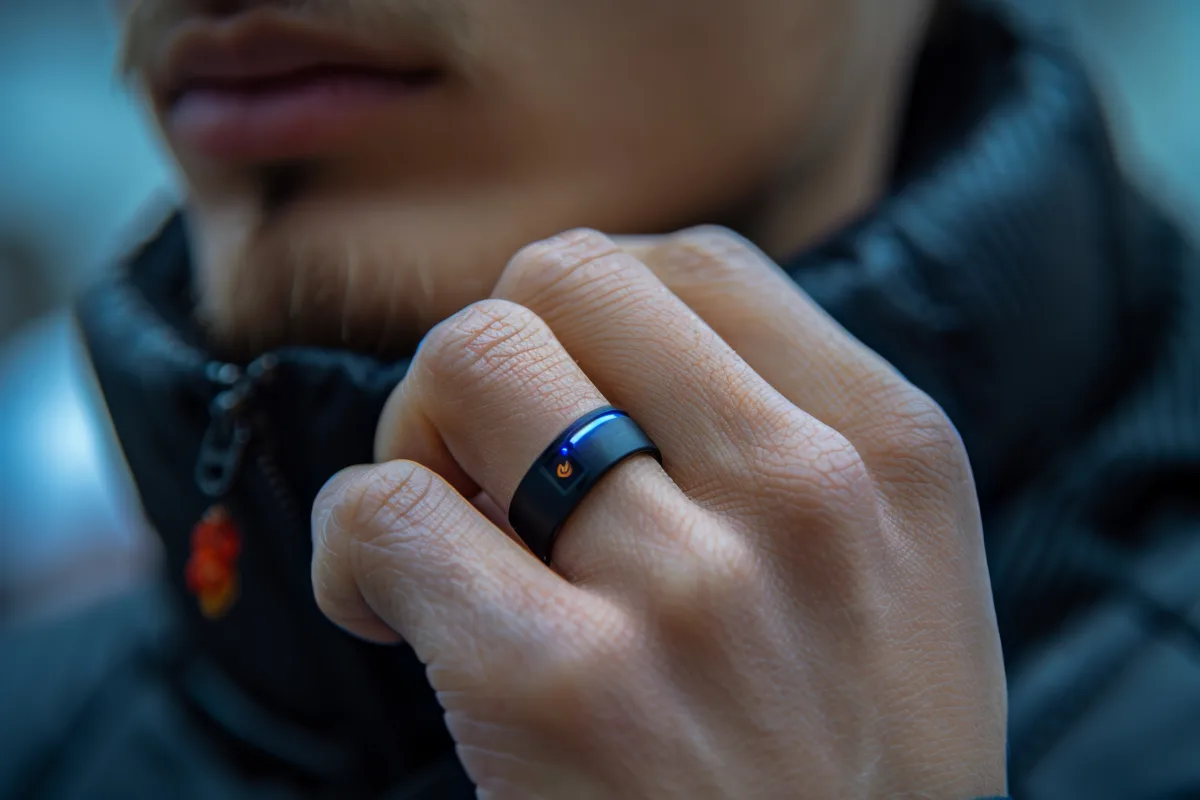
Health-focused smart rings may incorporate optical sensors, accelerometers, temperature sensors, and other components used to estimate physiological measurements and monitor changes in physical activity.
Bluetooth connectivity commonly allows these devices to exchange information with compatible smartphones, providing users with access to measurements, historical records, and personalized wellness insights.
Although collecting information is necessary for many wearable functions, users should understand whether their data remains on their devices or is transferred to external servers.
What personal information can smart rings collect?
Depending on the model, smart rings may estimate heart rate, heart rate variability, blood oxygen saturation, skin temperature, movement, and different sleep-related measurements.
Some companion applications also collect account information, device identifiers, usage statistics, and other details necessary to operate associated software and connected services.
Smart ring spying discussions should distinguish information collected directly by the wearable from additional information obtained through its smartphone application or connected services.
How smart rings differ from smartwatches
Unlike a traditional smartwatch, many smart rings prioritize compact design and passive monitoring without incorporating large displays or extensive interactive features.
However, smaller dimensions do not automatically guarantee stronger privacy protections because data collection practices depend on the device, companion application, and associated online services.
Consumers should compare technical specifications, privacy policies, and available security controls rather than assuming that one wearable category is inherently safer than another.
Myth 1: Smart rings are government surveillance tools
One common smart ring spying claim suggests that commercially available wearable rings are secretly designed to support systematic government surveillance of ordinary consumers.
Commercial smart rings are generally developed to provide specific consumer functions, such as wellness monitoring, activity tracking, voice interaction, and other connected device capabilities.
No publicly available FBI briefing confirming the specific mass-surveillance claims discussed here was identified, making it important to distinguish verified information from unsupported allegations.
Distinguishing commercial products from surveillance equipment
Consumer wearable devices are marketed for defined functions, while specialized surveillance equipment may be developed for substantially different operational requirements and intended applications.
However, a product's commercial purpose does not eliminate the possibility of unauthorized access, inappropriate data sharing, cybersecurity vulnerabilities, or legally authorized information requests.
Evaluating smart ring spying concerns requires examining the actual device capabilities, manufacturer practices, and available evidence rather than relying exclusively on its advertised purpose.
Can government agencies access smart ring data?
Government agencies may seek information held by technology companies through applicable legal procedures, depending on the jurisdiction, type of information, and circumstances of an investigation.
Different legal mechanisms may apply to different categories of personal information, meaning that a search warrant is not necessarily required for every possible disclosure.
These considerations are relevant to broader national security and consumer privacy discussions, but they do not establish that every wearable device is intentionally designed for government surveillance.
Understanding manufacturer transparency reports
Some technology companies publish transparency reports describing the types and quantities of government information requests received during particular reporting periods.
These reports may help consumers understand selected aspects of data disclosure practices, although their availability and level of detail vary considerably between manufacturers.
When researching smart ring spying concerns, consider whether the manufacturer explains its procedures for handling government requests and protecting information against unauthorized disclosure.
Myth 2: All smart rings secretly record conversations and video
Another common misconception suggests that all smart rings contain hidden microphones or miniature cameras capable of continuously recording conversations and surrounding activities.
Many conventional health-focused smart rings concentrate on physiological monitoring and do not advertise audio or video recording as part of their standard functionality.
Nevertheless, recording capabilities cannot be ruled out solely because a device is small, especially as manufacturers develop wearable products with increasingly specialized features.
Technical limitations and design priorities
Smart rings have limited internal space for batteries, sensors, wireless components, memory, and processing hardware, requiring manufacturers to make decisions about supported features.
Audio recording, video capture, and continuous wireless communication can introduce additional requirements involving power consumption, component dimensions, data storage, and operating temperatures.
These engineering considerations influence product design, but they do not make recording hardware impossible or provide a universal guarantee against smart ring spying.
Smart rings with voice recording capabilities
Some manufacturers have introduced smart rings specifically designed to capture voice notes, demonstrating that microphones can be integrated into compact wearable ring designs.
For example, the Pebble Index 01 incorporates a microphone and a physical control for recording spoken information, according to its manufacturer's published specifications.
This distinction is important because the presence of a microphone does not automatically establish covert recording, while its absence must be verified for each particular device.
Can smart rings record video?
Video recording requires suitable camera hardware and supporting components, meaning that a device cannot independently capture video without the necessary optical recording capabilities.
Consumers should consult technical specifications and reliable product documentation rather than assuming all wearable rings include cameras or are physically incapable of containing them.
When evaluating smart ring spying concerns, distinguish between recording performed by the ring itself and functions involving a connected smartphone or another external device.
How to check whether a smart ring has a microphone
Review the manufacturer's hardware specifications, product manuals, and functionality descriptions to determine whether the device includes microphones or supports voice recording features.
Also examine the companion application's permission requests, recognizing that access to a smartphone microphone does not necessarily indicate that the ring contains one.
Understanding these distinctions helps consumers make informed decisions about wearable devices that may be used in private, professional, or security-sensitive environments.
Myth 3: Smart ring data is easily hacked and accessible to anyone
Cybersecurity concerns are legitimate because wearable devices and their associated services may collect sensitive information about personal activities, physiological measurements, and daily routines.
However, the claim that anyone can easily access every smart ring user's information overlooks the differences between individual products, security controls, and potential vulnerabilities.
Smart ring spying risks depend on multiple factors, including software quality, account protection, communication protocols, manufacturer practices, and the security of connected devices.
Security measures used by wearable manufacturers
Manufacturers may implement encryption, secure authentication, access controls, software updates, and other cybersecurity measures intended to protect information collected through their wearable devices.
The presence and effectiveness of these protections vary between products, making it important to review available security documentation instead of assuming universal implementation.
Consumers should also consider whether the manufacturer provides ongoing security updates and clear procedures for responding to vulnerabilities affecting its products and services.
Understanding encryption and its limitations
Encryption can help protect digital information during transmission or storage by making the underlying data difficult to interpret without access to appropriate cryptographic keys.
However, encryption during transmission or storage does not necessarily indicate that a service uses end-to-end encryption or prevents the provider from accessing information.
Understanding these differences helps consumers evaluate smart ring spying concerns more accurately when reviewing manufacturer claims about the security of their personal data.
Account security and unauthorized access
Compromised passwords, phishing attempts, stolen smartphones, and insecure account recovery processes can create opportunities for unauthorized access to information stored within wearable applications.
Using strong and unique passwords, enabling available multifactor authentication, and maintaining secure smartphone access controls can help reduce several common account-related risks.
These measures provide additional protection, although they cannot eliminate vulnerabilities originating from defective software, compromised service providers, or inappropriate data handling practices.
What official US privacy guidance reveals about wearable devices
Official consumer protection guidance recognizes that connected health devices and mobile applications can collect sensitive information that requires appropriate handling and security safeguards.
Importantly, collecting biometric information does not automatically mean that a consumer wearable is secretly conducting surveillance or operating outside applicable legal requirements.
Smart ring spying claims should be evaluated using verifiable product information, credible cybersecurity research, and relevant regulatory guidance rather than unidentified intelligence briefings.
The role of the Federal Trade Commission
The Federal Trade Commission oversees various consumer protection matters involving companies that collect, use, store, or disclose sensitive personal information through digital products.
Its official Health Breach Notification Rule guidance explains notification obligations that can apply to certain health applications and connected devices outside the scope of HIPAA.
These requirements recognize that unauthorized disclosure of identifiable health information can create privacy concerns even when it does not result from conventional hacking.
Are smart ring devices protected by HIPAA?
The Health Insurance Portability and Accountability Act establishes privacy and security requirements for covered entities and their business associates when handling applicable protected health information.
Many direct-to-consumer wearable manufacturers and wellness applications do not automatically fall under HIPAA simply because they collect information related to personal health.
Consumers concerned about smart ring spying should investigate which legal protections apply to the particular company, service, and circumstances involving their personal information.
Why official sources matter when evaluating surveillance claims
Articles discussing government investigations or intelligence findings should identify the relevant agency, publication date, report title, and publicly accessible supporting documentation whenever possible.
Without such references, readers cannot independently determine whether particular surveillance claims accurately represent the conclusions reached by the government agency being cited.
Distinguishing documented findings from speculation helps consumers assess privacy risks without relying on misleading reassurances or unsupported allegations about wearable technology.
Where does smart ring data go after collection?
Understanding how information moves between a wearable device, smartphone application, cloud infrastructure, and external services is essential for evaluating its actual privacy characteristics.
Smart ring spying concerns frequently arise because consumers may understand what their devices measure without knowing where the resulting information is stored or shared.
Data processing arrangements differ between manufacturers, making individual privacy policies and technical documentation important resources when selecting and configuring wearable devices.
Local storage on the ring or smartphone
Some wearable devices temporarily retain collected information within their internal memory before transferring that information to a compatible smartphone or other connected device.
Companion applications may perform selected calculations locally, store historical information on the smartphone, or communicate with external services to provide additional functionality.
Local processing can limit certain data transfers, but users should verify whether the application also communicates with online services for other purposes.
Cloud storage and remote data processing
Cloud infrastructure may allow wearable companies to provide account synchronization, historical records, personalized recommendations, software functionality, and access across multiple compatible devices.
However, external storage introduces additional considerations involving access controls, data retention, security incidents, international transfers, and the manufacturer's policies for handling personal information.
Consumers evaluating smart ring spying risks should identify whether cloud processing is mandatory, optional, or configurable within the particular service they intend to use.
Third-party applications and connected services
Smart ring applications may offer integrations with fitness platforms, health applications, digital assistants, and other services that use information from different connected products.
Connecting these services may expand the number of organizations processing personal information and introduce additional privacy policies that govern how shared records are handled.
Review each proposed integration carefully and disable connections that no longer provide useful functionality or that require unnecessary access to sensitive personal information.
Can smart ring data reveal sensitive information about your life?
Health and activity measurements may provide information about individual routines, physical activity, sleep schedules, physiological changes, and other characteristics connected to everyday behavior.
When combined with account identifiers or information collected through companion applications, these records may reveal more personal details than individual measurements initially suggest.
This possibility represents a legitimate aspect of smart ring spying concerns, even when the device does not contain microphones, cameras, or dedicated location sensors.
Monitoring sleep and daily routines
Sleep tracking information may indicate approximate sleeping hours, changes in rest patterns, and other characteristics associated with the user's daily activities.
Historical activity records may also reveal recurring schedules or behavioral changes when information is collected consistently over extended periods of device use.
Consumers should consider the sensitivity of these records when reviewing storage arrangements, account security, and permissions granted to connected third-party applications.
Understanding location-related information
Not all smart rings contain independent GPS hardware, although associated applications may request smartphone location permissions for particular features or operating requirements.
When location information is collected, it may reveal movement patterns or geographic details depending on the software functionality and permissions granted by users.
Reviewing these permissions is important when assessing smart ring spying concerns because privacy risks can originate from companion applications rather than the wearable itself.
Biometric data and personal identification
Physiological measurements can constitute sensitive personal information, particularly when associated with account details, device identifiers, medical records, or other identifying characteristics.
Manufacturers may use different methods to remove or separate identifying information, but these practices do not automatically guarantee that records are completely anonymous.
Consumers should examine how information is shared, whether identification remains possible, and which organizations may receive access to their wearable data.
Protecting your privacy with smart rings
Protecting personal information requires understanding the available privacy settings, maintaining secure connected devices, and reviewing the practices of companies responsible for processing collected data.
Users can reduce certain smart ring spying risks by limiting unnecessary information sharing and adopting practical account protection measures throughout their wearable device experience.
These precautions complement manufacturer security responsibilities and help consumers maintain greater awareness of how their personal information is collected and managed.
Review privacy policies before purchasing
Before selecting a smart ring, examine the manufacturer's privacy policy and identify which information the product and its companion application collect.
Pay particular attention to stated purposes of collection, advertising practices, external service providers, data retention periods, and procedures for requesting access or deletion.
A clear understanding of these conditions can help consumers compare wearable products according to their privacy preferences rather than considering technical features alone.
Manage smartphone application permissions
Review the permissions requested by the smart ring application, including access to location information, Bluetooth connectivity, notifications, contacts, and other smartphone functions.
Grant permissions according to the features you actually intend to use, recognizing that some operating systems require specific permissions for particular connectivity functions.
Regular permission reviews can help reduce unnecessary information collection and identify changes introduced through application updates or newly enabled services.
Use strong passwords and multifactor authentication
Create a unique password for the account associated with your smart ring, avoiding credentials already used for email, banking, shopping, or other online services.
Enable multifactor authentication when available to introduce an additional verification requirement that may help protect accounts against certain unauthorized login attempts.
These practices address common smart ring spying risks involving compromised account credentials rather than focusing exclusively on vulnerabilities within the wearable hardware.
Keep device firmware and applications updated
Software updates may introduce functionality improvements, correct operating problems, and address cybersecurity vulnerabilities affecting wearable devices and their associated smartphone applications.
Install legitimate updates through official manufacturer channels and maintain your smartphone operating system according to its recommended security support procedures.
Consider whether older wearable devices continue receiving security updates before relying on them for long-term collection and storage of sensitive personal information.
Limit unnecessary information sharing
Examine optional data-sharing settings involving advertising, product research, social features, third-party integrations, and other purposes that may extend beyond essential device functionality.
Disable optional sharing arrangements that do not align with your privacy preferences, while reviewing how these changes may affect the availability of selected features.
Limiting unnecessary disclosures can help address smart ring spying concerns by reducing the number of services that receive information about your personal activities.
How to choose a smart ring with stronger privacy protections
Privacy considerations should form part of the purchasing process alongside battery life, comfort, hardware specifications, measurement capabilities, price, and compatibility with existing devices.
Consumers can compare manufacturers according to their transparency, security update policies, available privacy controls, and procedures for responding to personal information requests.
These considerations help evaluate smart ring spying risks before purchasing a wearable rather than discovering important restrictions after establishing an account and collecting information.
Check security update commitments
Review whether the manufacturer provides information about firmware support, vulnerability reporting procedures, security patches, and the anticipated operating lifespan of its wearable devices.
Products that no longer receive appropriate security maintenance may become more vulnerable when new software weaknesses are identified or connected services change.
A documented update policy provides useful context, although it does not independently guarantee that vulnerabilities will be discovered or corrected within a particular period.
Check available data access and deletion options
Determine whether the associated service allows users to download collected records, remove selected information, close accounts, and request deletion of retained personal data.
Review any limitations involving backup systems, legally required retention periods, previously shared information, or other circumstances affecting the completion of deletion requests.
These capabilities can help consumers maintain greater control over sensitive information collected throughout their use of wearable technology.
Evaluate whether every smart feature is necessary
Different smart rings provide different combinations of wellness tracking, connectivity, voice interaction, payment functionality, notifications, and other digital services.
Choosing a device that provides only the features you need may help limit unnecessary data collection, depending on how the particular product is designed.
Consumers concerned about smart ring spying should compare supported features and associated privacy requirements before selecting wearable products with extensive connected functionality.
What to do if you suspect unauthorized access
Unexpected account activity, unfamiliar connected applications, unusual permission requests, or unexplained changes to privacy settings may justify reviewing the security of your wearable service.
However, unusual battery consumption or connectivity problems alone do not prove that a device has been compromised or is secretly performing surveillance activities.
Respond to potential smart ring spying incidents by examining verifiable account information, securing access credentials, and contacting the manufacturer through its official support channels.
Review account activity and connected services
Check available account activity records, registered devices, active sessions, and third-party integrations to identify unfamiliar connections that may require further investigation.
Remove unauthorized integrations where possible and sign out unfamiliar sessions using the security controls provided by the relevant application or associated online service.
Preserve relevant notifications or account records if you believe an incident may require investigation by the manufacturer or another appropriate organization.
Secure your account and contact customer support
Change compromised or potentially exposed passwords using a trusted device and enable available multifactor authentication to strengthen protection against further unauthorized account access.
Contact the manufacturer's official customer support team to describe the observed activity and request information concerning available investigation and account recovery procedures.
If the incident involves financial fraud or identity theft, consider contacting the appropriate financial institutions and official consumer protection authorities for additional assistance.
The future of smart rings and privacy regulations
Wearable technology continues developing through improvements in sensors, battery efficiency, artificial intelligence, connectivity, and other features that may introduce new consumer privacy considerations.
As devices become more capable, manufacturers and regulators face ongoing challenges involving sensitive information collection, consumer transparency, and protection against inappropriate data disclosures.
Future approaches to smart ring spying concerns will depend on technological developments, regulatory decisions, manufacturer accountability, and the effectiveness of available consumer privacy controls.
Enhanced transparency and informed consent
Clear explanations of information collection, processing, retention, and sharing can help consumers understand the privacy implications of using increasingly sophisticated wearable products.
Manufacturers can support informed decisions by presenting accessible privacy controls and explaining how optional data-sharing arrangements affect the functionality of their services.
These practices may become increasingly important as smart rings expand beyond traditional health monitoring into additional connected and artificial intelligence-powered applications.
Privacy by design and data minimization
Privacy by design involves considering information protection during the development of hardware, software, infrastructure, and associated services rather than addressing concerns only after deployment.
Data minimization encourages organizations to collect and retain information appropriate to their legitimate operational purposes instead of accumulating unnecessary records about individual consumers.
Both approaches can help address smart ring spying concerns when manufacturers implement them effectively throughout their products and supporting digital services.
Future developments in wearable security

Potential improvements include stronger authentication methods, more local data processing, clearer permission controls, and better mechanisms for identifying vulnerabilities within connected wearable products.
However, future security improvements cannot be guaranteed, and newly introduced technologies may also create additional privacy challenges requiring careful evaluation and appropriate safeguards.
Consumers should continue reviewing actual product capabilities and manufacturer practices rather than assuming future devices will automatically provide complete protection against unauthorized access.
Summary of the three smart ring privacy myths
Wearable privacy discussions should distinguish legitimate concerns about personal information from unsupported claims suggesting that every smart ring functions as a covert surveillance device.
Understanding the differences between recording hardware, data collection, government information requests, and cybersecurity vulnerabilities helps consumers evaluate smart ring spying claims more accurately.
The following table summarizes the three principal misconceptions and additional considerations associated with using connected wearable devices in everyday life.
Key Point | Brief Description |
|---|---|
Myth 1: Government Surveillance | Commercial smart rings should not automatically be classified as government surveillance tools. Claims of systematic surveillance require supporting evidence. |
Myth 2: Hidden Recording | Recording capabilities vary by model. Some smart rings include microphones, while many health-focused devices do not advertise recording functions. |
Myth 3: Easy Hacking | Security risks depend on hardware, software, account protection, manufacturer practices, and associated online services. |
FBI Briefing Claims | The specific intelligence briefing cited in circulating claims could not be verified through publicly available official documentation. |
Biometric Data Collection | Wearable sensors may collect sensitive physiological and activity information that requires appropriate privacy safeguards. |
Cloud Storage | External data processing introduces considerations involving retention, security, third-party access, and information disclosure. |
Encryption | Encryption can protect information, but its implementation varies and does not automatically establish end-to-end protection. |
FTC Regulation | Applicable federal consumer protection requirements may address unauthorized health information disclosures and breach notifications. |
HIPAA Coverage | Consumer wearable manufacturers are not automatically covered by HIPAA simply because their products collect health-related information. |
Application Permissions | Review permissions and disable unnecessary access to smartphone functions and third-party services. |
Account Protection | Use unique passwords, available multifactor authentication, and secure smartphone access controls. |
Software Updates | Install legitimate firmware and application updates to benefit from available security improvements. |
Frequently asked questions about smart ring privacy
Do smart rings have hidden microphones or cameras?
Capabilities vary by model. Many health-focused smart rings do not advertise audio or video recording, but some specialized products include microphones for capturing voice notes.
Can the government use my smart ring to spy on me?
Government agencies may seek information from technology companies through applicable legal procedures. However, this does not establish that commercially available smart rings are systematically designed for government surveillance.
How secure is the data collected by my smart ring?
Security depends on the manufacturer's practices, software quality, encryption methods, account protections, and connected services. No digital system can guarantee complete protection against unauthorized access.
What kind of data do smart rings typically collect?
Health-focused smart rings may collect heart rate, movement, sleep measurements, skin temperature, blood oxygen estimates, and other physiological information depending on their available sensors.
What can I do to protect my privacy when using a smart ring?
Review privacy policies, manage permissions, use unique passwords, enable available multifactor authentication, install software updates, and limit unnecessary data sharing with external services.
Is smart ring spying a real possibility?
Unauthorized access, inappropriate data sharing, and misuse of sensitive information are possible risks involving connected wearable devices. However, specific surveillance claims require credible supporting evidence.
Has the FBI released a briefing debunking these three smart ring myths?
No publicly available official FBI briefing supporting these specific conclusions was identified during the review of this article. Readers should avoid attributing unverified claims to government agencies.
Can a smart ring listen to conversations?
A ring requires suitable recording hardware to capture audio directly. Some smart rings include microphones, while others focus exclusively on different functions. Check the specifications of your particular model.
Does every smart ring track my location?
No. Location capabilities vary between devices and applications. Some companion applications may obtain location information through smartphone permissions even when the ring does not contain independent GPS hardware.
Can smart ring manufacturers sell or share personal data?
Data-sharing practices depend on the company's policies, user permissions, applicable legal requirements, and specific circumstances. Review the privacy policy before purchasing or connecting external services.
Are smart rings protected by HIPAA?
Not automatically. HIPAA applies to covered entities and business associates under defined circumstances. Many consumer wearable manufacturers fall outside its direct coverage but may be subject to other privacy requirements.
Are smart ring health records completely anonymous?
Not necessarily. Information may remain associated with account identifiers, devices, or other personal characteristics. Anonymization and de-identification practices vary between companies and services.
Does Bluetooth encryption guarantee complete privacy?
No. Encryption can help protect data during communication, but privacy also depends on storage practices, authentication, software security, and how information is subsequently accessed or shared.
Can I delete all my smart ring data?
Deletion options depend on the manufacturer, applicable privacy laws, and data retention requirements. Review the available account controls and understand any limitations before submitting a deletion request.
Can smart rings work without cloud storage?
Some products support local processing or offline functions, while others rely on cloud infrastructure for important features. Check the specifications and software requirements of the particular device.
Does unusual battery drain mean someone is spying on my smart ring?
No. Battery problems can result from software issues, aging components, connectivity difficulties, or normal changes in device usage. Battery drain alone is not evidence of unauthorized surveillance.
Should I stop using smart rings because of privacy concerns?
That depends on your privacy preferences, the sensitivity of the collected information, and the security characteristics of your chosen product. Evaluate its actual capabilities and available safeguards before making a decision.
Conclusion
Understanding smart ring spying concerns requires separating unsupported surveillance claims from legitimate questions about recording capabilities, biometric information collection, data sharing, and cybersecurity vulnerabilities.
Although wearable devices can provide useful health insights and digital functionality, consumers should remain aware of manufacturer practices, application permissions, and applicable privacy protections.
By reviewing verified product information, maintaining secure accounts, and limiting unnecessary data sharing, users can make more informed decisions about incorporating smart rings into everyday life.
