2026 Secure Chip Initiative: Smartwatch Impact
Anúncios
Secure chips in 2026 are an important part of smartwatch cybersecurity, helping manufacturers protect sensitive information through hardware-backed encryption, authentication, and secure processing. Discover how these technologies could influence the next two generations of American smartwatches, what NIST guidance actually establishes, and which security features consumers should evaluate.
Secure chips in 2026 are becoming an increasingly relevant topic as smartwatches handle personal information, contactless payments, location services, and health-related measurements.
Hardware-based security can help protect certain information from unauthorized access, but its effectiveness depends on how manufacturers integrate chips with operating systems, applications, and connected services.
This guide examines security developments that could influence the next two generations of American smartwatches, while distinguishing established cybersecurity guidance from unsupported claims about federal mandates.
Understanding Secure Chip Technology in 2026
Modern smartwatches are compact computing devices that combine sensors, wireless connectivity, applications, and systems for storing or processing personal information.
As their capabilities expand, manufacturers must consider how to protect information throughout its lifecycle, from collection and processing to storage and transmission.
Secure hardware components can contribute to this process by providing specialized functions for cryptography, device authentication, and protection of sensitive operations.
Is There a Federal Secure Chip Mandate for Smartwatches?
There is no verified nationwide federal requirement called the "2026 Secure Chip Initiative" mandating new security chips in the next two generations of American smartwatches.
However, the United States has established cybersecurity guidance and requirements relevant to certain connected devices, government acquisitions, and manufacturer security practices.
These developments are important to distinguish from a universal rule requiring every consumer smartwatch sold in the country to include a particular chip.
Federal Cybersecurity Guidance That Actually Exists
The National Institute of Standards and Technology, commonly known as NIST, publishes guidance to help organizations understand and improve the security of Internet of Things products.
Its IoT Device Cybersecurity Capability Core Baseline, published as NISTIR 8259A, addresses capabilities involving device identification, data protection, configuration, and software updates.
In April 2026, NIST published Revision 1 of NISTIR 8259, updating foundational cybersecurity activities for manufacturers of connected products.
Why Connected Devices Matter for Cybersecurity
Smartwatches frequently communicate with smartphones, wireless networks, and cloud services, creating multiple points where information may be accessed or transferred.
Security weaknesses in any connected component can potentially expose data or affect device functionality.
These considerations also connect wearable technology with broader discussions about national security, although consumer smartwatch cybersecurity and government security requirements are not identical.
The Core Principles of Secure Watch Hardware
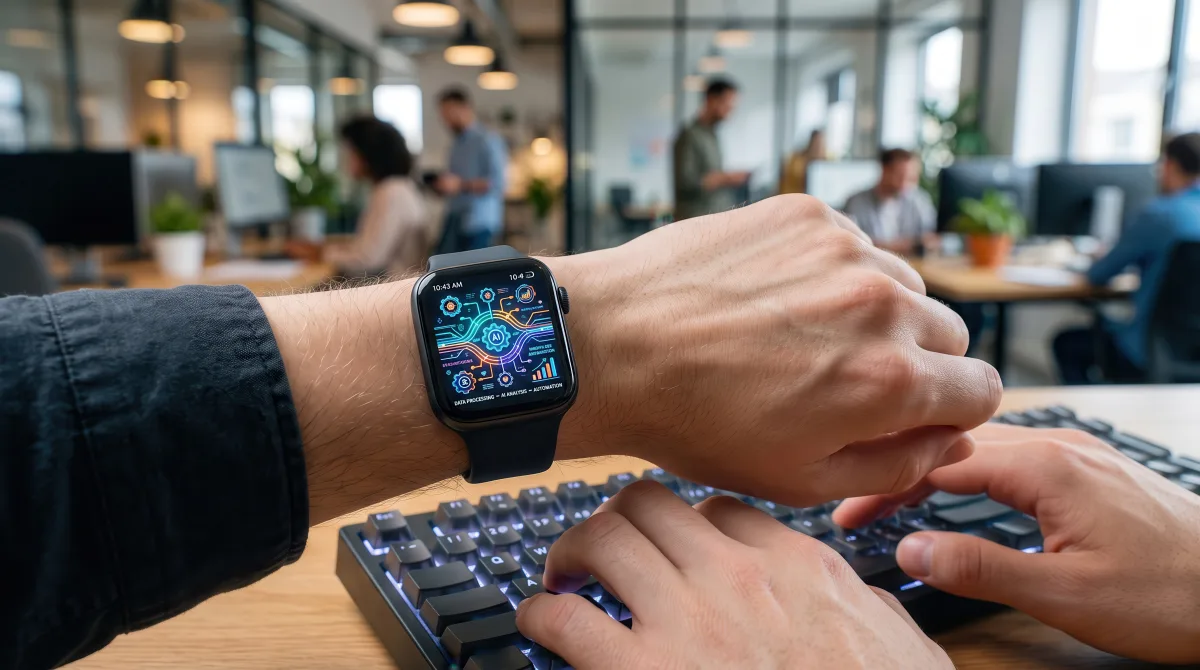
Hardware security involves features built into electronic components that help protect cryptographic operations, important credentials, and selected device functions.
These capabilities can make certain attacks more difficult, particularly when sensitive operations are isolated from less trusted software environments.
However, hardware security is only one part of an effective cybersecurity strategy and cannot eliminate every vulnerability.
Hardware-Backed Encryption
Encryption converts readable information into a protected format that requires an appropriate key or process to access.
Some devices use specialized hardware to generate, manage, or protect encryption keys rather than exposing them directly to ordinary applications.
This approach can reduce certain risks, but the overall protection still depends on secure implementation, access controls, and responsible software design.
Secure Boot Mechanisms
Secure boot helps a device verify that selected software components meet established authenticity or integrity requirements during startup.
When implemented correctly, these mechanisms can make it harder for unauthorized firmware to execute during the boot process.
However, secure boot does not guarantee that every application or service running afterward is free from vulnerabilities.
Tamper Resistance and Secure Processing
Some security components are designed to resist attempts to extract information through physical or electronic manipulation.
The exact level of protection varies according to the hardware design, threat model, and manufacturing process.
It is inaccurate to assume that all secure chips automatically destroy themselves or permanently lock a device when a problem is detected.
Device and User Authentication
Authentication mechanisms help confirm that users, applications, and connected devices are authorized to access protected functions.
These mechanisms may include passcodes, protected credentials, cryptographic verification, and supported biometric authentication.
Combining authentication with appropriate access controls can reduce unauthorized use, although no single method provides absolute protection.
Enhanced Data Privacy and Protection for Users
Smartwatches can collect and process information related to health, movement, location, communications, and financial activities.
These capabilities make privacy an important consideration when selecting a wearable device or connecting it to additional services.
Hardware-backed security can help protect certain sensitive operations, but privacy also depends on data collection policies, user permissions, and cloud processing practices.
Protecting Sensitive Health Information
Wearable devices may collect information such as heart rate, activity levels, sleep estimates, and other measurements depending on their available sensors.
Some of this information may be stored locally, synchronized with a smartphone, or transmitted to an online account.
Resources such as Health Data can provide broader context about health information, but users should also review the specific privacy practices of their wearable manufacturer.
Security for Contactless Payments
Many smartwatches support digital wallets that allow users to make payments at compatible terminals.
Payment systems may use secure elements, tokenization, and authentication mechanisms to help protect transaction credentials.
However, the exact protection depends on the payment provider, device design, and circumstances of the transaction.
Location Tracking and Privacy Controls
Location features can support navigation, activity tracking, safety functions, and other connected services.
They can also create privacy concerns when applications receive broader access than users intend.
Reviewing permissions and location-sharing settings helps users decide which services may collect or use their information.
Reducing Identity Theft Risks
Stolen credentials, compromised accounts, and unauthorized access to connected devices can contribute to privacy and financial risks.
Secure hardware may protect selected credentials, but account security also depends on authentication settings and user behavior.
Practical identity theft prevention includes protecting passwords, monitoring accounts, and avoiding suspicious requests for personal information.
How Secure Chips Could Affect Smartwatch Performance
Dedicated security hardware can perform certain cryptographic operations without relying entirely on the smartwatch's general-purpose processor.
In some designs, this specialization may improve the efficiency of specific security-related tasks.
However, installing a secure chip does not automatically make every application faster or improve overall battery life.
Dedicated Cryptographic Processing
Specialized processing components can accelerate supported encryption, authentication, and other security operations.
By handling selected tasks efficiently, they may help reduce the processing burden on other components.
The practical result depends on the device's hardware architecture, software implementation, and the operations being performed.
Potential Effects on Battery Life
Battery performance is influenced by display technology, processor efficiency, wireless connectivity, sensors, and software activity.
Efficient security components may contribute to lower power consumption during certain operations, but this does not guarantee longer battery life.
Consumers should compare measured battery performance rather than assuming that secure hardware produces a specific improvement.
Faster and More Reliable Payments
Hardware-assisted authentication may help payment systems complete supported security checks efficiently.
However, transaction speed can also depend on communication protocols, terminal compatibility, network conditions, and payment processing.
A secure element should therefore be evaluated for its protection capabilities rather than treated as proof of instantaneous payments.
Supporting On-Device Artificial Intelligence
Some wearable manufacturers may combine specialized processors with artificial intelligence features that analyze information locally.
Local processing can reduce the need to transmit certain data to external systems, depending on the application design.
Nevertheless, secure chips are not necessarily artificial intelligence accelerators, and advanced AI features require additional processing resources and software support.
Security Across the Next Two Smartwatch Generations
The next two product generations could introduce refinements in hardware security, operating system protections, and privacy management.
However, there is no verified federal rule establishing that these generations must follow a specific secure-chip timetable.
Potential developments should therefore be evaluated as technology trends rather than guaranteed regulatory outcomes.
First Generation: Improving Existing Security Foundations
Near-term smartwatch designs may continue refining hardware-backed credential storage, secure startup processes, and authenticated software updates.
Manufacturers may also expand privacy controls for sensitive applications and connected services.
The availability of these features will depend on individual products rather than a uniform requirement applying to every brand.
Second Generation: More Integrated Security Architectures
Later designs could incorporate more integrated protections across sensors, processors, operating systems, and wireless communication systems.
Some manufacturers may explore additional isolation techniques or more sophisticated methods for detecting unusual device behavior.
These possibilities depend on technological progress, cost considerations, and product development priorities.
Will Older Smartwatches Become Obsolete?
Older devices do not automatically become insecure because a newer model introduces additional hardware protections.
Software updates, supported authentication methods, and manufacturer security maintenance remain important considerations.
Consumers should review their device's support status before assuming that an upgrade is necessary.
How to Evaluate a New Smartwatch
Look for clear manufacturer information about software updates, data protection, supported authentication, and account recovery.
Review how the device handles health information, payment credentials, and permissions granted to applications.
Security features should be considered alongside compatibility, battery life, accessibility, and everyday usefulness.
Challenges and Opportunities for Manufacturers
Developing secure wearable products requires coordination between hardware engineers, software developers, security specialists, and manufacturing partners.
Companies must evaluate potential vulnerabilities while balancing performance, battery capacity, device size, and production costs.
These responsibilities can create challenges, but they may also encourage improvements in product quality and consumer trust.
Costs of Security Engineering
Security development can involve specialized components, secure software processes, testing, and long-term vulnerability management.
The cost of these activities varies according to product complexity and the protection measures selected by the manufacturer.
It would be misleading to attribute a particular price increase to a federal secure-chip mandate that has not been verified.
Supply Chain Considerations
Manufacturers often rely on multiple suppliers for processors, wireless components, sensors, and other electronic parts.
Security planning can include evaluating supplier practices, component authenticity, and risks involving firmware and software dependencies.
These considerations support a broader approach to product security that extends beyond the main processor.
Opportunities for Product Differentiation
Manufacturers may distinguish their devices through transparent privacy policies, well-supported software, and security features that customers can understand.
Independent testing and clear documentation can help consumers assess security claims more effectively.
However, marketing language should not imply compliance with a nonexistent federal smartwatch initiative.
Supporting Smaller Manufacturers
Smaller companies may face challenges when investing in security testing, specialized engineering, and long-term updates.
Recognized cybersecurity frameworks and established development practices can provide useful starting points.
NIST guidance is particularly relevant because it describes capabilities and supporting activities that connected-device manufacturers can consider.
The Role of Software and Ecosystem Integration
Secure hardware offers limited protection if applications, operating systems, and connected services introduce avoidable weaknesses.
A comprehensive strategy must consider how information moves between the smartwatch, smartphone, and cloud services.
Manufacturers should therefore evaluate security throughout the complete product lifecycle rather than relying exclusively on a hardware component.
Harmonizing Hardware and Software Security
Operating systems can use hardware-backed capabilities to help protect selected credentials and sensitive operations.
Applications should follow appropriate access controls and avoid collecting information that is not necessary for their intended functions.
These practices work together to reduce potential exposure, although their effectiveness depends on implementation and continued maintenance.
Secure Software Updates
Software updates can correct vulnerabilities discovered after devices are released.
Secure update processes help verify that approved software is installed and that unauthorized changes are more difficult to introduce.
Consumers should check whether a smartwatch receives ongoing security updates and understand the manufacturer's published support policy.
Application Permissions and Sandboxing
Operating systems may use application isolation and permission controls to limit how software accesses device information.
These protections can reduce opportunities for an application to obtain unrelated data or interfere with other components.
However, users should still review permissions and avoid installing applications from sources they do not trust.
Cloud Security and Data Synchronization
Many smartwatches synchronize information with cloud accounts to provide backups, analytics, and cross-device features.
When information leaves the device, its protection depends on network security, authentication, service design, and the provider's policies.
Hardware security cannot independently guarantee the confidentiality of data stored or processed by external services.
Consumer Education and Security Awareness
Consumers can strengthen their protection by enabling available device locks, reviewing permissions, and maintaining updated software.
Protecting associated accounts with strong authentication is also important because account compromise can affect connected services.
Clear manufacturer instructions help users apply these protections without requiring specialized technical knowledge.
Smartwatch Security and Broader Digital Infrastructure
Consumer wearables are part of a larger ecosystem of connected technology that includes smartphones, home devices, enterprise systems, and online services.
Security concerns can arise when devices share credentials, communicate across networks, or interact with sensitive applications.
However, these connections should not be interpreted as evidence that every smartwatch is a critical infrastructure device.
Connected Wearables in Professional Environments
Some organizations allow employees to use smartwatches for notifications, communications, and approved work-related applications.
Depending on the environment, employers may establish rules concerning wireless connections, personal devices, and access to sensitive systems.
These requirements can differ substantially from the expectations applied to ordinary consumer use.
Managing Security Risks in Sensitive Settings
Organizations responsible for sensitive systems may restrict wearable devices or require additional security controls.
Such decisions depend on threat assessments, operational needs, and the potential consequences of unauthorized access.
These considerations are part of broader discussions about protecting critical infrastructure and connected technologies.
Why Hardware Security Is Not Enough
Even advanced hardware cannot prevent every form of phishing, account compromise, insecure application behavior, or accidental disclosure.
Security measures must also address software vulnerabilities, user authentication, incident response, and operational practices.
Layered protection is generally more reliable than depending on a single component or security feature.
Future Outlook: Generations Beyond 2026

Future wearable development may introduce more sophisticated security architectures, although specific capabilities and launch schedules remain uncertain.
Manufacturers continue balancing device security with physical size, battery efficiency, performance, and affordability.
The next two generations of smartwatches may reflect these priorities in different ways depending on brand, operating system, and intended users.
Post-Quantum Cryptography
Researchers and technology organizations are developing cryptographic methods intended to resist attacks from sufficiently powerful future quantum computers.
NIST has published standards for selected post-quantum cryptographic algorithms, providing a foundation for broader migration planning.
However, there is no verified requirement that all American smartwatches adopt post-quantum chips in their next two generations.
More Advanced Threat Detection
Future devices may incorporate more sophisticated monitoring of software integrity and unusual activity.
Such capabilities could help identify selected security problems, depending on their design and effectiveness.
However, claims that smartwatches will automatically repair every vulnerability should be treated as speculative.
Biometric Authentication Developments
Wearable manufacturers may continue exploring ways to authenticate users through device possession, behavioral patterns, and available biometric signals.
Different approaches involve tradeoffs between convenience, privacy, accuracy, and security.
New biometric features should be evaluated using demonstrated performance rather than assumptions about their reliability.
Digital Identity and Connected Services
Secure hardware could support additional credential-based services and interactions between compatible devices.
These applications may include selected identity verification and access-control functions where providers implement appropriate standards.
However, decentralized identity systems and blockchain-based credentials are not guaranteed features of future smartwatch generations.
National Security Considerations
The use of connected devices in sensitive environments can introduce risks involving location data, communications, and access to organizational systems.
Federal and enterprise security policies may impose specific restrictions depending on the operational environment.
Understanding these national security risks requires distinguishing consumer product design from the protection of government and enterprise infrastructure.
How Consumers Can Improve Smartwatch Security Today
Consumers do not need to wait for a new generation of secure chips to take practical steps toward protecting their wearable devices.
Many security improvements depend on available settings, account protection, and continued software support.
These precautions can reduce certain common risks, although no personal device can be made completely immune to cyberattacks.
Keep the Device and Companion Phone Updated
Install security updates provided by the smartwatch and smartphone manufacturers.
Updates can address vulnerabilities discovered after a product enters the market.
Review the official support information to understand whether older devices continue receiving security maintenance.
Use Available Screen Locks
Enable a passcode or other supported locking mechanism when available.
Some smartwatches also provide wrist-detection features that automatically lock selected functions after removal.
These settings may reduce unauthorized access if the device is lost or left unattended.
Review Application Permissions
Check which applications can access location, activity information, health measurements, and other sensitive data.
Disable unnecessary permissions and remove applications you no longer use.
Pay attention to how companion smartphone applications handle and share information collected by the watch.
Protect the Connected Account
Use strong, unique passwords for accounts associated with your smartwatch and enable additional authentication when supported.
A compromised online account may expose synchronized information even when the physical watch remains secure.
Monitor important security notifications and avoid responding to suspicious credential requests.
Prepare for Loss or Theft
Review the manufacturer's available features for locating, locking, or erasing a lost device.
Understand the limitations of remote actions, including the possibility that they require network connectivity.
If a smartwatch supports payments, follow the payment provider's instructions for protecting or disabling associated credentials after loss.
Secure Chips in 2026: Key Takeaways
Secure chips in 2026 can contribute to better device protection through specialized cryptography, authenticated startup processes, and controlled handling of sensitive information.
However, these technologies should not be confused with a verified federal mandate requiring new security chips in the next two generations of American smartwatches.
The following table summarizes four areas where hardware security may influence wearable technology.
Key Aspect | Brief Description |
|---|---|
Enhanced Security | Hardware-backed encryption, authentication, and secure processing can help protect selected data and device functions. |
Improved Performance | Specialized components may perform certain cryptographic operations efficiently, but overall speed and battery improvements are not guaranteed. |
New Features Unlocked | Future devices may introduce stronger credential protection and additional secure services, depending on product development. |
Manufacturer Challenges | Security engineering requires coordinated hardware, software, testing, supplier management, and long-term update support. |
Frequently Asked Questions About the 2026 Secure Chip Initiative
What is the primary goal of the 2026 Secure Chip Initiative?
There is no verified federal smartwatch mandate officially established under the name "2026 Secure Chip Initiative." However, secure chip technologies generally aim to protect sensitive device information through hardware-backed cryptography, authentication, and other security functions. NIST publishes established cybersecurity guidance for connected-device manufacturers, including its updated foundational activities released in April 2026.
How will this initiative impact current smartwatches?
Because the claimed initiative has not been verified as a federal requirement, there is no established rule requiring current smartwatches to be replaced or retrofitted with specific security chips. Existing devices may continue receiving software improvements where manufacturers provide support. Future hardware changes depend on individual product development decisions rather than an identified universal mandate.
Will secure chips make smartwatches more expensive?
Additional security components and engineering can influence product development costs, but the final retail price depends on many factors, including manufacturing scale, hardware design, and market competition. There is no verified federal secure-chip requirement that establishes a specific price increase for American smartwatches in 2026.
What kind of data will be protected by these new chips?
Depending on the device architecture, secure hardware may protect encryption keys, authentication credentials, payment-related operations, and selected sensitive information. Health measurements and location data may also benefit from broader security measures. However, the actual protection depends on how manufacturers implement hardware, software, applications, and cloud services.
How will this initiative benefit American consumers?
Consumers may benefit from continued improvements in wearable cybersecurity, including stronger authentication, protected credential handling, and better software maintenance. However, there is no evidence of a universal 2026 federal initiative guaranteeing improvements across the next two generations. Buyers should evaluate the specific security features and support policies of each smartwatch.
Conclusion: A More Secure Future for American Smartwatches
Secure chips in 2026 represent an important technological approach to protecting information handled by connected wearable devices.
Although the claimed federal Secure Chip Initiative has not been verified, established NIST guidance and ongoing improvements in hardware and software security provide a meaningful framework for understanding future developments.
Manufacturers and consumers should prioritize verifiable protections, transparent privacy practices, reliable security updates, and responsible handling of sensitive data.
These considerations are also relevant to the broader discussion of national security and connected technology, without suggesting that a particular chip can guarantee complete protection.
